


Hail damage to your solar pool heating? What to check after Adelaide's storm

Quick answer: Hail can puncture solar pool heating collectors, crack the header pipes along the edge and knock out the roof sensor. Watch for water on the roof or in the gutters while the pump runs, a pool level that drops faster than usual, or a pool that won't hold heat. Check from the ground, not the roof. Take photos for your insurer, and get a written assessment and quote before any repairs start.
Severe storms crossed South Australia and metropolitan Adelaide on Sunday 11 October, from the afternoon until about 9pm. The SES took more than 100 calls, mostly about fallen trees, and reported 3cm hail at Happy Valley at about 7:45pm (ABC News). Hail that size can do real damage to anything on a roof. Solar pool heating sits on top of the roof for the whole storm, so it's worth a proper check.
How hail damages solar pool heating
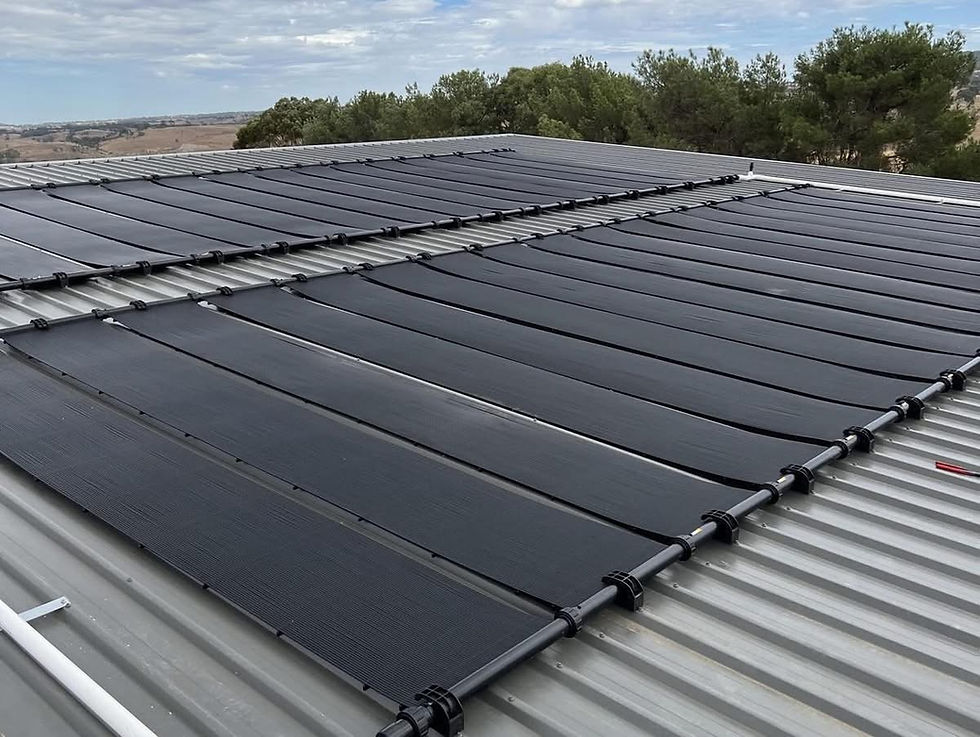
A solar pool heating system is a set of black collectors on your roof, joined by header pipes along the top and bottom edges. Your pool pump pushes water up through them, the sun heats it, and it flows back to the pool. A sensor on the roof tells the controller when it's warm enough to send water up.
Hail can damage each part:
Collectors. Flexible strip collectors like the Zane Gulfstream can split or puncture. Hard panel collectors like the Zane Gulfpanel can crack.
Header pipes and fittings. The pipes along the edges, and the clips and joints holding them, can crack or break loose.
Roof sensor. A damaged sensor can stop the controller switching the solar on, or leave it running when it shouldn't.
Older systems. Collectors that have had 15 or 20 summers of UV are more brittle, so they're more likely to crack. Our solar pool heating page notes that extreme hail can shorten a system's life.
Signs your system took damage
You can check most of this from the ground. Don't climb onto the roof, especially while it's wet. Look for:
Water running down the roof or overflowing the gutters while the solar is running on a dry day.
The pool level dropping faster than usual. A leak in the collectors pumps pool water straight onto the roof.
Visible splits, dents or loose pipes you can see from the yard or an upstairs window.
The pool not heating like it used to, even on sunny days.
The controller acting strangely, such as showing an error or never switching the solar on.
If you can see water leaking, set the solar controller to off so the pump stops sending water to the roof. Your filtration can keep running as normal.
What to do before you call your insurer
Whether hail damage to pool solar is covered depends on your policy, so ask your insurer first. The Queensland Government's guide to disaster insurance claims covers the basics, and they apply anywhere:
Contact your insurer as soon as you can. Ask what they need from you before anything is repaired.
Photograph and video the damage. Shots from the ground or an upstairs window are fine.
Take reasonable steps to stop further damage. Turning the solar off to stop it leaking counts.
Check with your insurer before major repairs. Don't let anyone pull the old system off until your insurer says so.
Keep the damaged parts until the claim has been assessed.
How Beasley can help
We've been heating Adelaide pools since 1979, and we service most brands, including systems we didn't install. After a hail storm, here's how it works:
Onsite assessment. A Beasley technician checks the collectors, pipes, sensor and controller, and photographs the damage.
Written, itemised quote. You get a quote that spells out what's damaged and what it costs to repair or replace. You can send it straight to your insurer.
Repair or replace. Once you have the go-ahead, we fix or replace the system and get your pool heating again.
One of our customers, Elena S., left this Google review after a hail repair: "Had my pool solar system repaired after major hail damage, this new system works 100times better than what I had before!"
Repair or replace?
Situation | Usually the better option |
A few punctures in otherwise healthy collectors | Repair |
A cracked header pipe, broken fitting or damaged sensor | Repair |
Damage across many collectors | Replace |
A system over 15 to 20 years old with hail damage | Replace, because the collectors are near the end of their life anyway |
A replacement can also be a chance to upgrade. Today's Zane collectors are built for Australian sun, and our solar page says the TPR strip collectors have a design life of up to 25 years.
Book a hail damage assessment
If you think your solar pool heating took damage on 11 October, book a service visit or get in touch. You can also email photos of the damage to sales@bpp.com.au, and we'll tell you what we can see before we visit.
Frequently asked questions
Can hail damage solar pool heating?
Yes. Large hail can puncture flexible strip collectors, crack hard panels, and break header pipes and roof sensors. Older systems with UV-aged collectors are the most at risk.
How do I know if my pool solar is leaking?
Look for water running off the roof or out of the gutters while the solar is on, and a pool level that drops faster than usual. Check from the ground, not from the roof.
Does home insurance cover hail damage to pool solar?
That depends on your policy, so check with your insurer. Take photos, lodge early, and get a written quote before repairs start.
Can you give me a quote for my insurance claim?
Yes. After an onsite assessment we give you a written, itemised quote for the repair or replacement, which you can send to your insurer.
Should I repair or replace hail-damaged pool solar?
A few punctures or a broken fitting can usually be repaired. Widespread damage, or damage to a system that's already 15 to 20 years old, usually makes replacement the better choice.
Do you fix brands you didn't install?
Yes. We specialise in Zane, but we service most solar pool heating brands, including systems we didn't install.


Comments